

The way we communicate visually has undergone a quiet revolution over the past two decades. Billboards have given way to dynamic digital displays. Print layouts have evolved into responsive web experiences. And the tools designers use—once confined to physical studios—now live in the cloud, accessible to anyone with a laptop and a creative eye.
Digital graphic design sits at the center of this shift. It’s the discipline that shapes how brands present themselves, how information gets organized, and how stories get told across screens of every size. From the scroll-stopping social media graphic to the carefully typeset e-book, visual communication design has expanded its reach further than ever before—and the pace of change shows no sign of slowing.
This post explores how digital graphic design is transforming visual communication, what that means for designers and businesses alike, and where the discipline is headed next.
What Is Digital Graphic Design, and Why Does It Matter?
Digital graphic design is the practice of creating visual content for digital platforms—websites, apps, social media, video, and beyond. Unlike traditional graphic design, which was largely rooted in print, digital design must account for interactivity, screen resolution, animation, and user experience.
The scope of visual communication design has expanded dramatically as a result. A designer working today might create a static logo in the morning, animate a social media story in the afternoon, and review UX wireframes before the end of the day. The craft has grown more versatile, more technical, and more integrated with other disciplines than ever before.
Why does this matter? Because visuals now drive decision-making at every level. Research consistently shows that humans process images faster than text—and in digital environments saturated with content, the quality of visual communication can determine whether a message lands or disappears entirely.
How Digital Tools Have Redefined the Design Process
The shift from analog to digital didn’t just change what designers could create—it changed how they create it. Tools like Adobe Creative Cloud, Figma, Canva, and Sketch have democratized visual design, lowering the barrier to entry while raising the ceiling of what’s possible.
The Rise of Collaborative, Cloud-Based Design
 Platforms like Figma fundamentally changed the workflow of visual communication design by making collaboration real-time and browser-based. Designers, developers, and stakeholders can now review, annotate, and iterate on the same file simultaneously—no more versioning chaos or emailed PDFs.
This collaborative model has compressed timelines and made the feedback loop tighter. A brand identity that might have taken weeks to approve in a traditional agency setting can now move from concept to sign-off in days.
Automation and AI-Assisted Design
Artificial intelligence has introduced a new layer of capability to digital graphic design. Tools now exist that can generate layout suggestions, resize assets automatically for different platforms, remove backgrounds in seconds, and even produce initial visual concepts from text prompts.
This hasn’t replaced designers—it’s shifted what designers spend their time on. Repetitive production tasks increasingly get handled by automation, freeing designers to focus on the work that requires genuine creative judgment: storytelling, emotional resonance, and strategic thinking.
Visual Communication Design Across Different Mediums
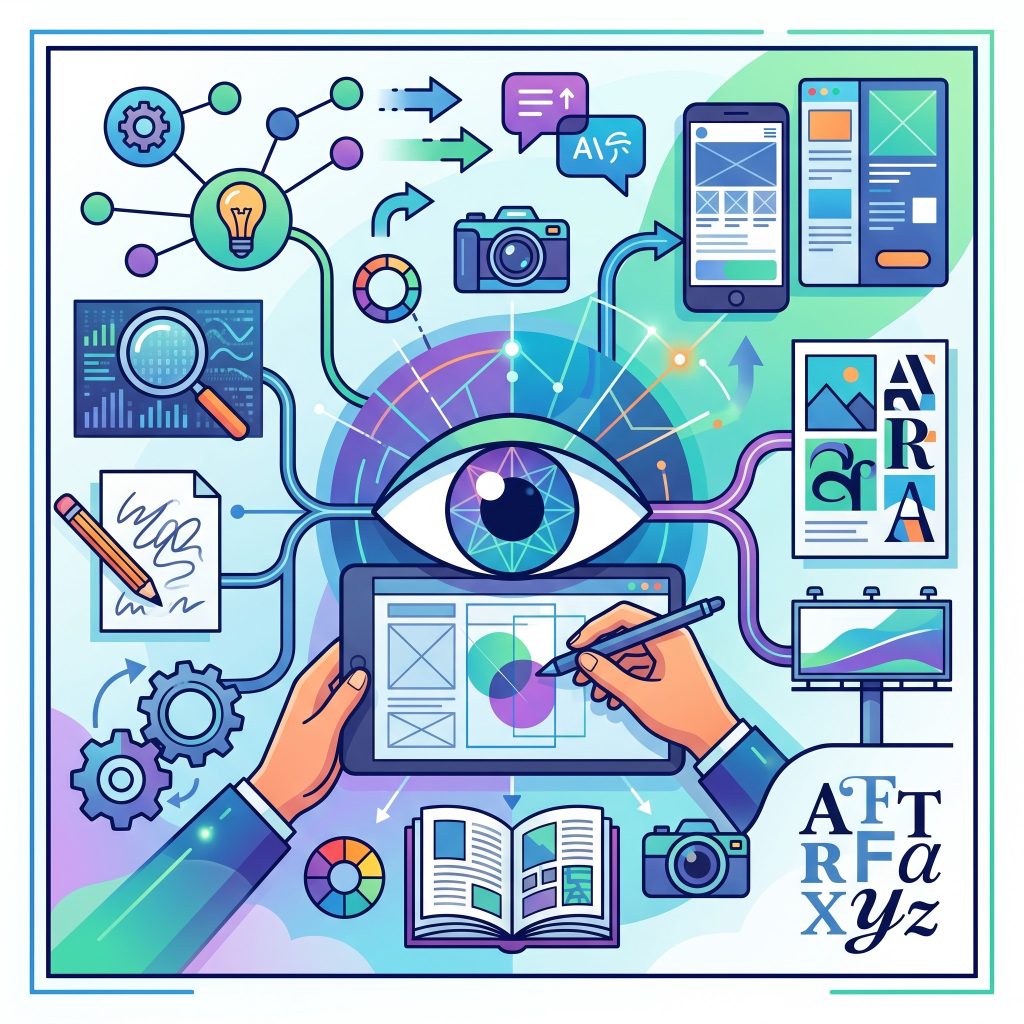 One of the defining features of modern digital graphic design is its breadth. Visual communication now spans a wider range of mediums than any previous era—and each one comes with its own demands.
Web and UI Design
Digital graphic design underpins the entire visual experience of the internet. Typography choices, color systems, grid structures, icon design, illustration styles—all of these elements contribute to how users perceive and navigate digital products. Good visual communication design in a web context means more than aesthetics; it means clarity, hierarchy, and usability working together.
Social Media and Motion Graphics
Social media platforms have created enormous demand for visual content that performs—content that earns attention in a feed crowded with competing posts. Motion graphics, animated typography, and short-form video have become essential tools for brands communicating in these environments.
This is where audio visual design increasingly intersects with graphic design. As platforms like Instagram, TikTok, and YouTube prioritize video content, designers must now think in terms of movement, timing, and sound as well as static composition. The line between graphic designer and motion designer has blurred considerably.
Brand Identity and Digital-First Branding
Brand identity has always been a core output of graphic design, but the digital era has raised new challenges. A logo must now work at 16×16 pixels as a browser favicon and 1200×1200 pixels on a retina display. Color palettes must perform on screens with wildly different calibrations. Typography must render correctly across operating systems and devices.
Digital-first brands—companies born online without a physical storefront—have pushed visual communication design to develop more sophisticated, flexible identity systems that can adapt without losing coherence.
Data Visualization and Infographics
Complex information has always needed design to make it accessible, but the digital environment has amplified the demand for data visualization. Interactive charts, animated infographics, and dashboard design have become specialized corners of visual communication design—places where the ability to simplify and clarify information has real, measurable impact on understanding.
The Cultural Influence of Digital Graphic Design
Design doesn’t exist in a vacuum. It both reflects and shapes culture—and the digital era has accelerated this dynamic considerably.
Aesthetic movements that once took years to filter from design studios into mainstream culture now spread globally in weeks. The brutalist web design trend, the return of maximalist typography, the widespread adoption of glassmorphism—these shifts propagate through social media, creative communities like Dribbble and Behance, and design-focused publications far faster than any previous aesthetic cycle.
This speed creates pressure on designers to develop a strong visual identity and point of view, rather than simply following trends. The most effective visual communication design tends to transcend cycles—it draws on timeless principles of composition, contrast, and hierarchy while making thoughtful choices about contemporary context.
For those looking to build this kind of foundational fluency, visual design books remain valuable resources. Titles like Thinking with Type by Ellen Lupton, The Elements of Typographic Style by Robert Bringhurst, and Grid Systems by Josef Müller-Brockmann offer principles that apply whether you’re designing for print or a high-resolution OLED screen.
Digital Graphic Design and Accessibility
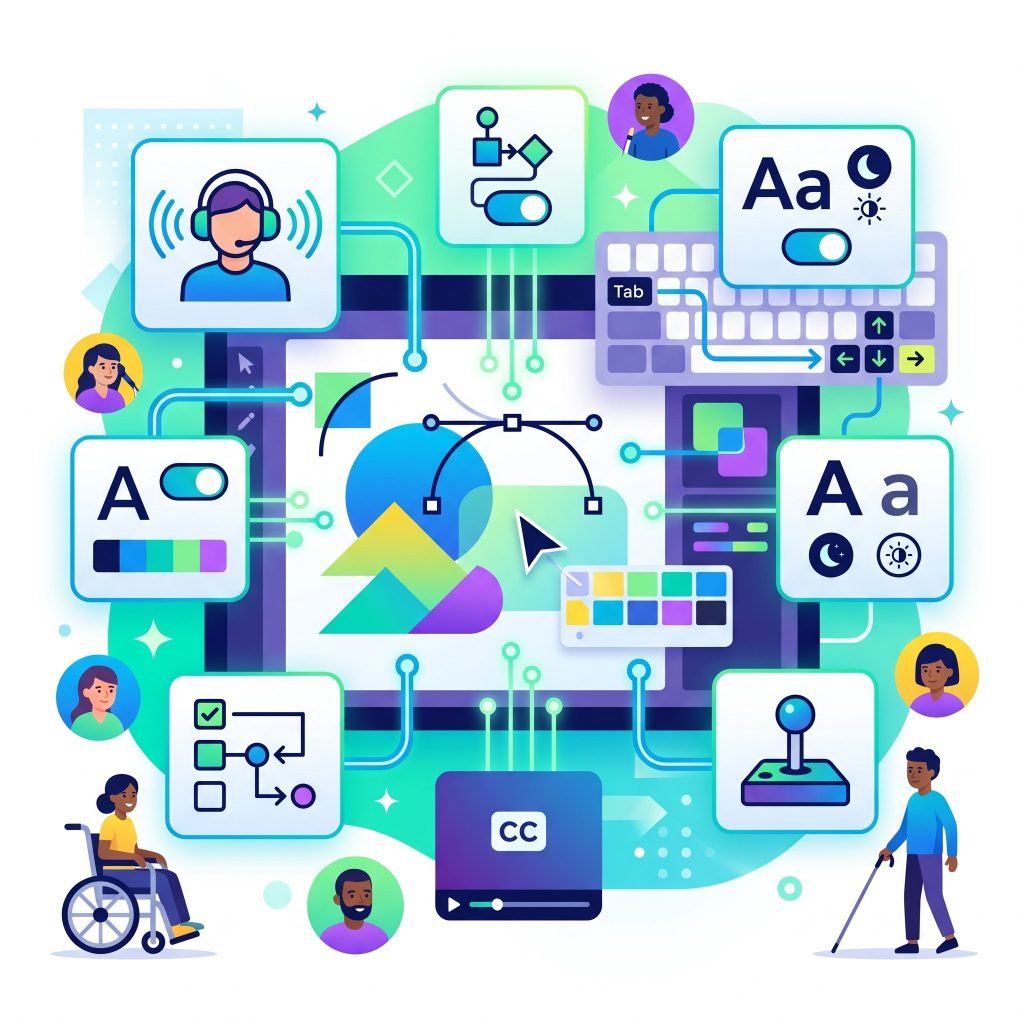 One of the most important developments in visual communication design over the past decade is the growing emphasis on accessibility. Designing for users with visual impairments, cognitive differences, or motor challenges is no longer a niche concern—it’s an ethical imperative and, in many jurisdictions, a legal requirement.
This means designers must consider contrast ratios carefully, choose typefaces that remain legible at smaller sizes, avoid relying solely on color to convey information, and ensure that any audio visual design elements include appropriate captions and transcripts.
The Web Content Accessibility Guidelines (WCAG) have become a standard reference for digital graphic design projects, particularly in web and app contexts. Accessibility is increasingly treated not as a constraint that limits creativity, but as a design challenge that improves outcomes for all users.
What the Future of Digital Graphic Design Looks Like
Several emerging developments point toward where visual communication design is headed.
Immersive and spatial design is gaining momentum as augmented reality (AR) and virtual reality (VR) technologies mature. Designing for three-dimensional, spatial environments requires fundamentally different thinking about depth, perspective, and interaction—skills that most graphic designers are only beginning to develop.
Generative design, powered by AI, will continue to change the production end of digital graphic design. Designers who learn to work with generative tools—rather than resist them—will be better positioned to scale their output and focus on higher-order creative decisions.
Sustainability in digital design is an emerging consideration. The energy consumption of digital products is becoming a concern for environmentally conscious brands, and designers are beginning to think about how choices like dark mode defaults, image optimization, and reduced animation loads can contribute to more sustainable digital experiences.
Cross-discipline integration will deepen. The convergence of graphic design with UX, motion, audio visual design, and even sound design means that future visual communicators will need broader skill sets and greater comfort working across disciplines.
FAQ: Digital Graphic Design & Visual Communication Design
1. What is digital graphic design?
Digital graphic design is the creation of visual content specifically for digital platforms like websites, apps, social media, and online ads, focusing on screen-based communication rather than print.
2. How is digital graphic design different from traditional graphic design?
Traditional design is mainly print-focused, while digital design includes interactivity, motion, responsive layouts, and user experience considerations for multiple screen sizes and devices.
3. Why is visual communication design important today?
Because audiences process visuals faster than text, strong visual communication helps brands grab attention, explain ideas clearly, and influence decisions in crowded digital spaces.
4. What tools do digital graphic designers commonly use?
Popular tools include Adobe Creative Cloud (Photoshop, Illustrator), Figma, Sketch, Canva, and various AI-assisted design platforms.
5. How has AI impacted digital graphic design?
AI helps automate repetitive tasks like resizing, background removal, and layout suggestions, allowing designers to focus more on creativity, storytelling, and strategy.
6. What skills are essential for a digital graphic designer?
Key skills include typography, color theory, composition, UX understanding, branding, motion basics, and proficiency with design software.
7. What is the role of UI/UX in visual communication design?
UI/UX ensures that visual elements are not only attractive but also functional, intuitive, and user-friendly across digital products like apps and websites.
8. How does motion graphics fit into digital design?
Motion graphics add animation, timing, and storytelling to static visuals, making content more engaging—especially on social media and video platforms.
9. Why is accessibility important in digital design?
Accessibility ensures that designs are usable for everyone, including people with disabilities, by using proper contrast, readable typography, and alternative text or captions.
10. What is the future of digital graphic design?
The future includes more AI-assisted workflows, immersive AR/VR experiences, cross-disciplinary design (UX, motion, audio), and a stronger focus on sustainability and adaptability.
Building a Foundation That Lasts
Digital graphic design has always been about more than aesthetics. The best visual communication design solves problems, tells stories, and creates connections. The digital environment has expanded the canvas and complicated the craft—but it hasn’t changed what ultimately matters: clarity of intent, quality of execution, and respect for the audience.
For designers building their practice, this means investing in both technical skills and conceptual depth. Learn the tools, yes. But also study the history of the discipline through visual design books and case studies. Develop an understanding of color theory, typography, and composition that transcends any specific platform or software.



Leave a Reply